

Module Overview
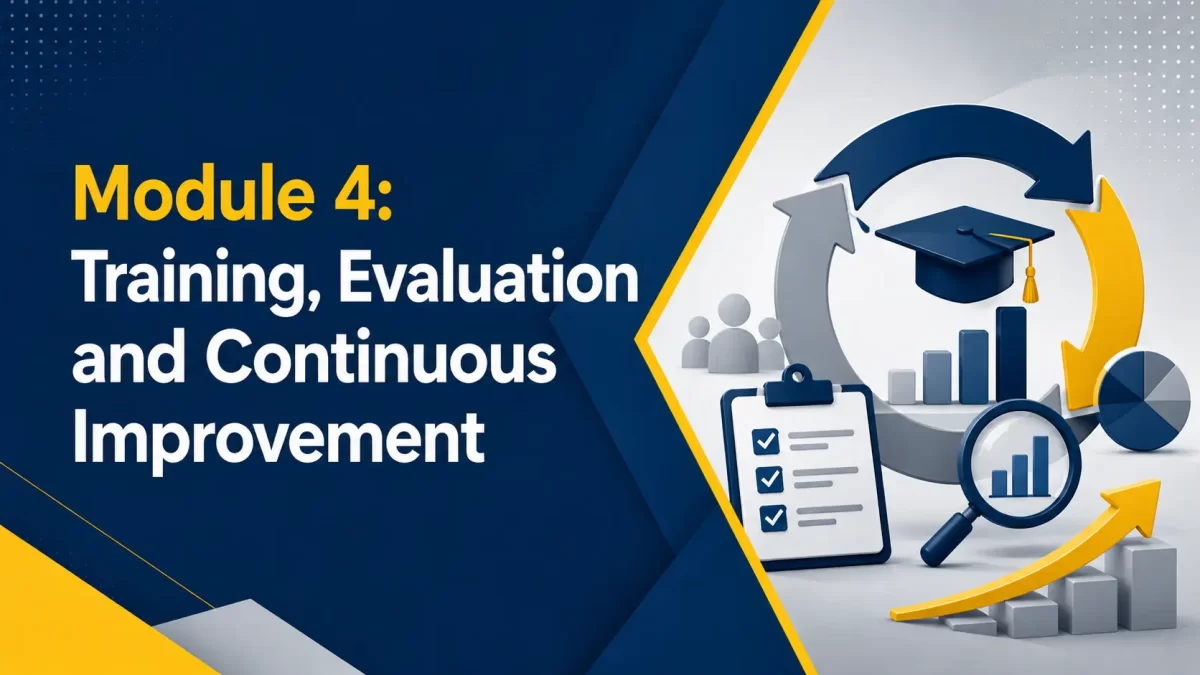
Module 4 focuses on organizational governance, evaluation methodologies, and continuous improvement of whistleblower protection systems. The module was developed in response to project findings demonstrating that many organizations formally comply with legal obligations while still lacking effective operational systems, organizational trust, and sustainable reporting cultures.
The module introduces participants to the lifecycle of whistleblower protection systems and emphasizes the importance of continuous organizational learning, professionalization, monitoring, and evaluation.
Participants examine the difference between formal compliance and effective implementation. The module explores how organizations may possess formal reporting channels while still experiencing:
- low trust,
- weak visibility,
- lack of reporting activity,
- poor communication,
- inadequate retaliation prevention,
- and weak institutional independence.
Governance, Evaluation & Continuous Improvement
This module focuses on governance, organizational evaluation, and the continuous improvement of whistleblower protection systems.
Compliance Theater
The concept of “compliance theater” is examined to encourage participants to critically assess whether organizational systems function effectively in practice.
Governance Principles & Organizational Responsibilities
The module also introduces participants to governance principles and organizational responsibilities related to whistleblower protection systems. Topics include:
Organizational Self-Assessment
Participants learn how to conduct organizational self-assessment and evaluate the maturity of reporting systems using practical indicators and evaluation methodologies.
Evaluation Indicators
The module explores indicators related to:
Continuous Improvement Mechanisms
The module further addresses continuous improvement mechanisms and emphasizes the importance of:
Practical Reflection & Evaluation
Practical exercises encourage participants to evaluate their own organizational environments and identify weaknesses requiring improvement.
Scenario: “The Invisible Reporting System”
The scenario “The Invisible Reporting System” allows participants to analyze an organization with formally existing reporting structures but weak operational performance and low employee trust.
Participants Assess
Learning Outcome
By the end of the module, participants acquire practical skills related to evaluation, organizational governance, and development of more trustworthy and effective whistleblower protection systems.
Learning Objectives
By the end of this module, participants will be able to:
- evaluate organizational whistleblower protection systems,
- identify governance and operational weaknesses,
- understand organizational maturity concepts,
- apply self-assessment methodologies,
- develop organizational improvement measures,
- and understand principles of continuous organizational learning and evaluation.
Key Topics
- Lifecycle of whistleblower protection systems
- Organizational governance
- Independence and accountability
- System visibility and accessibility
- Organizational trust
- Communication quality
- Retaliation monitoring
- System self-assessment
- Organizational maturity
- KPIs and evaluation indicators
- Continuous improvement
- Organizational learning and training
Learning Activities
- Animated video lessons
- Organizational self-assessment exercise
- KPI development exercise
- Scenario analysis (“The Invisible Reporting System”)
- Governance reflection exercise
- System maturity mapping
- Discussion forum
- Knowledge quiz
Output
Learning Outcomes
Participants Acquire Practical Understanding Of
- Organizational evaluation methodologies
- Governance principles
- Continuous improvement mechanisms
Participants Are Able To
- Assess strengths and weaknesses of reporting systems
- Identify organizational risks
- Develop improvement proposals
- Evaluate system maturity
- Apply practical evaluation tools within their organizations